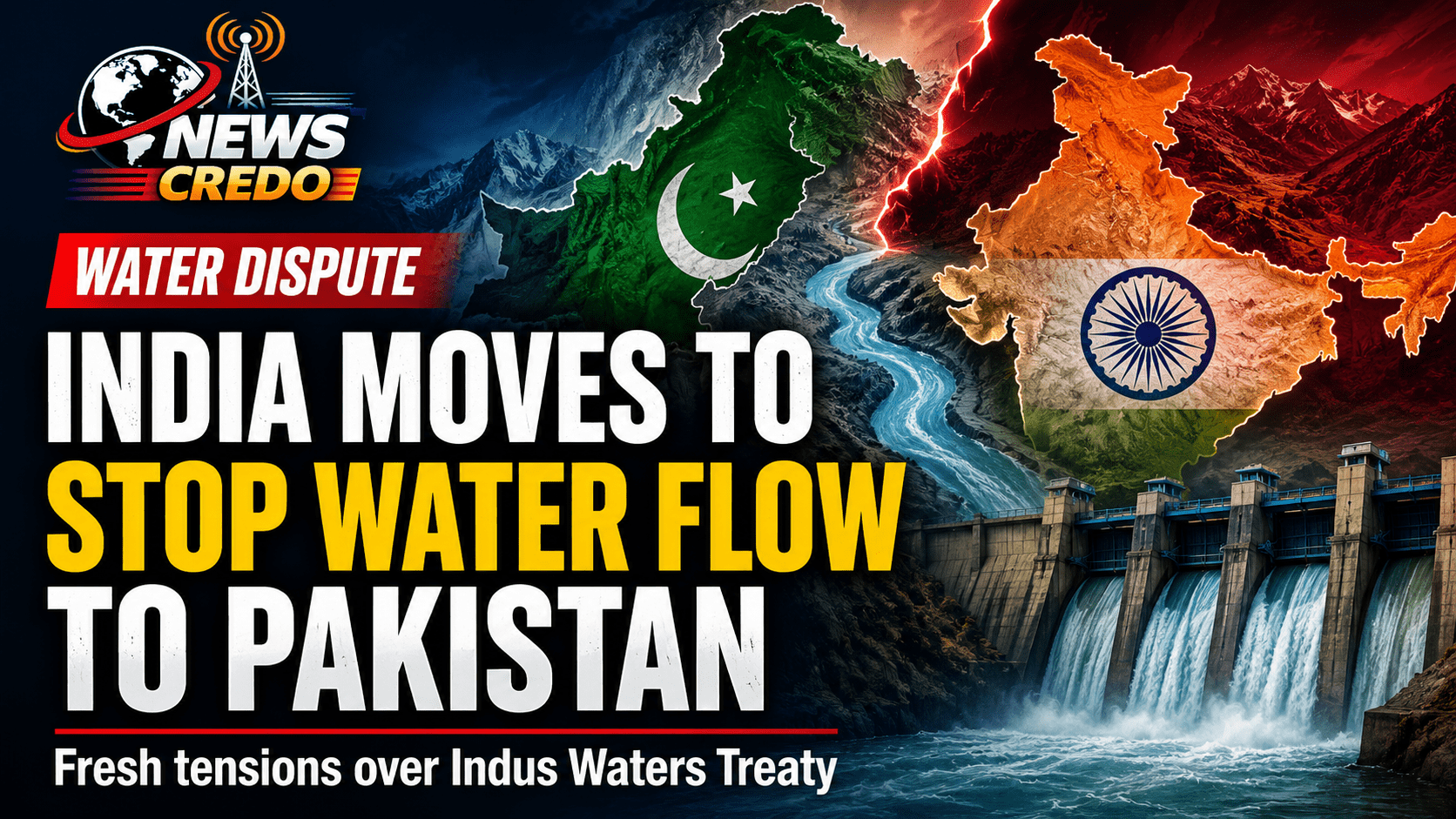
New Delhi: India’s Water Resources Minister C.R. Patil has said that the government is working on measures to ensure that “not even a single drop of water” flows from India to Pakistan in the future, a statement likely to intensify tensions over the Indus Waters Treaty.
In an interview with Indian news agency ANI, Patil said practical steps were being taken in line with Prime Minister Narendra Modi’s directions. He said India was reviewing different plans related to the use and management of its river waters.
The statement comes amid heightened tensions between Pakistan and India over the future of the Indus Waters Treaty, which has governed water-sharing between the two countries since 1960.
India announced in May 2025 that it was suspending its participation in the treaty following a deadly attack on tourists in Indian-administered Kashmir. New Delhi blamed Pakistan for the incident, while Islamabad rejected the allegations.
The Indus Waters Treaty, brokered by the World Bank in 1960, regulates the distribution and use of water from six rivers that originate in India and flow into Pakistan. These rivers are a vital source of water for millions of people, agriculture and livelihoods in Pakistan.
Pakistan maintains that the treaty remains legally binding and that there is no room for unilateral withdrawal from the agreement. Islamabad has already warned that any major change in cross-border water flows could be viewed as a serious hostile act.
Earlier this month, Pakistan accused India of attempting to use water as a “weapon” after New Delhi announced two new projects linked to the Chenab River.
India’s state-run National Hydroelectric Power Corporation issued a tender in May for a tunnel project that could divert Chenab waters toward the Beas basin.
Meanwhile, India’s Ministry of Power has said that desilting work is also under way at the Salal Power Station on the Chenab River, a move that began after the suspension of the treaty.
Experts say the future of the Indus Waters Treaty and the growing dispute over river water distribution could become a major diplomatic, legal and water-security challenge for the region.
Water remains one of the most sensitive issues between the two nuclear-armed neighbours, as Pakistan’s agriculture and economy depend heavily on river flows, while India maintains that it has the right to use its share of water more effectively.