India’s student-led protest movement has entered a new phase, with demonstrations continuing across multiple cities as thousands of young people demand accountability over exam paper leaks, education reforms, and greater employment opportunities. What began as anger over examination irregularities has grown into a broader expression of frustration among many young Indians.
Students Keep Pressure on the Government
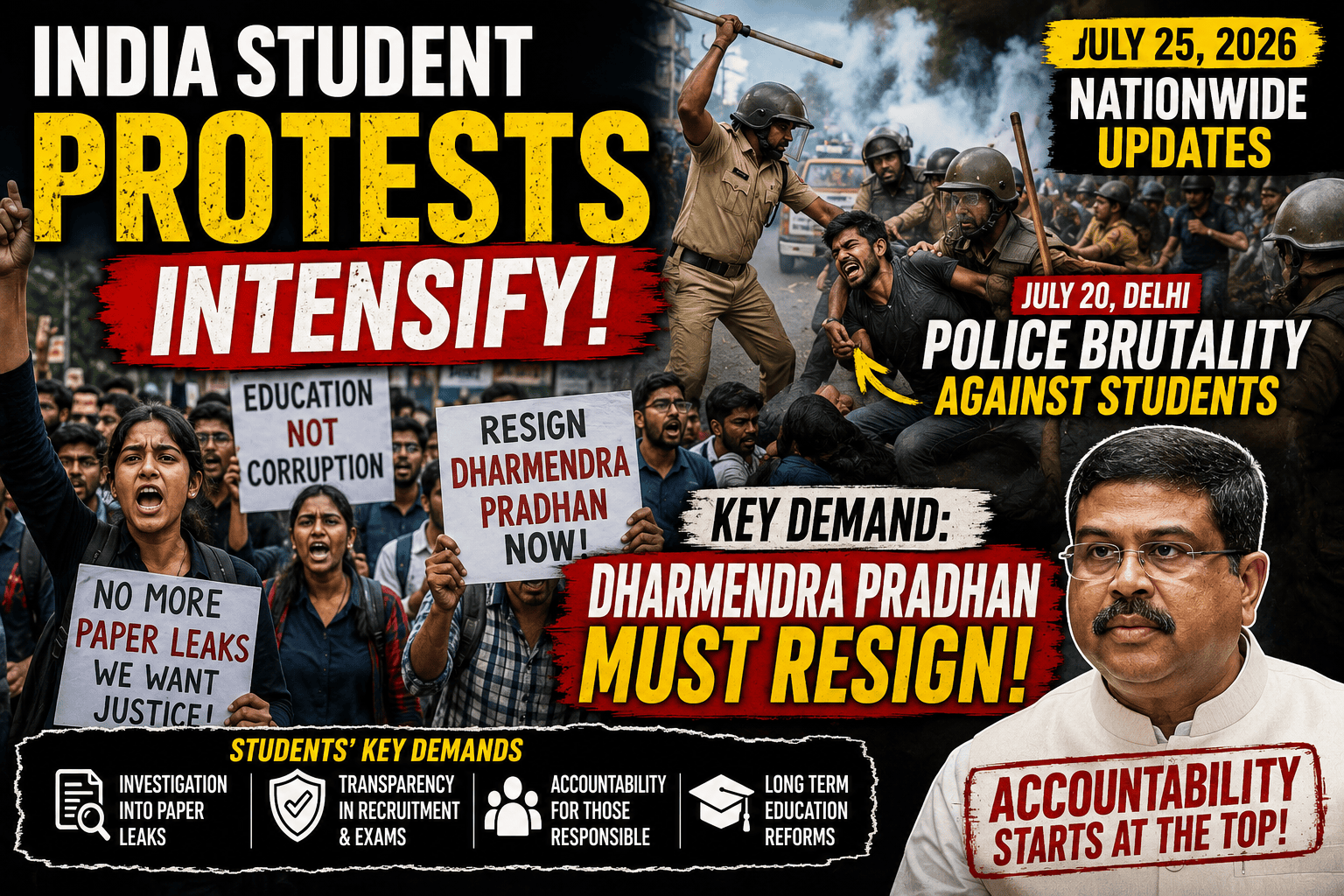
On July 25, student organizations and youth groups announced fresh demonstrations in several states, including Bihar, where rallies focused on demands for education reform and the resignation of Union Education Minister Dharmendra Pradhan. Organizers urged protesters to remain peaceful and avoid violence during the marches.
Protesters argue that their concerns extend beyond a single examination issue. Many say repeated paper leaks, limited job opportunities, and declining confidence in public institutions have created widespread dissatisfaction among India’s youth.
For many student groups, Dharmendra Pradhan’s resignation has become the movement’s primary demand. Protest leaders argue that accountability must begin at the highest level before confidence in the education system can be restored. They believe leadership changes are necessary alongside structural reforms to prevent future examination controversies.
“This is no longer only about one exam. Many students say they are demanding transparency, accountability, and long-term reforms in the education system.”
July 20 Police Action Becomes a Turning Point
The protests gained further momentum after demonstrations in New Delhi on July 20, where clashes broke out between protesters and Delhi Police.
Student groups, independent journalists, and human rights organizations alleged that police used batons, physical force, tear gas, and detained several protesters while dispersing the demonstration. Videos shared on social media showed confrontations between police and students, leading to widespread criticism from civil society groups.
Amnesty International and Human Rights Watch later called for investigations into allegations of excessive force against peaceful demonstrators and emphasized the importance of protecting the right to peaceful assembly.
Delhi Police, however, defended its actions, stating that officers acted to maintain law and order and prevent disruption in the capital.
For many protesters, the events of July 20 transformed the movement from an education issue into a broader debate about democratic rights and freedom of peaceful protest.
Independent Journalists Highlight Voices Missing From Television
Several independent reporters and digital journalists have focused on interviews with students, documenting personal stories about cancelled examinations, months of preparation, and concerns about future employment.
Many protesters accused sections of the mainstream television media of underreporting or misrepresenting their concerns, saying independent journalists were providing more extensive coverage from protest sites.
Reuters also reported that some television reporters faced hostility from protesters who accused parts of the mainstream media of failing to represent their concerns fairly. Protest organizers publicly appealed for peaceful treatment of journalists despite widespread criticism of media coverage.
Pressure Mounts on the Modi Government
The protests have increased political pressure on Prime Minister Narendra Modi’s government.
Critics argue that the government’s response has been slower than many students expected and say broader reforms are needed to restore confidence in India’s examination system. While the government has announced some reform measures and held discussions with protest representatives, student organizations insist that their key demand remains the resignation of Dharmendra Pradhan, along with deeper structural reforms.
Political analysts describe the movement as one of the most significant youth-led challenges faced by the government in recent years, reflecting wider concerns about governance, employment opportunities, and institutional accountability.
Social Media Becomes the Main Platform
With many young people expressing distrust toward traditional television news, social media platforms and independent digital creators have become major sources of information about the protests.
Videos from protest sites, interviews with students, and livestreams have attracted millions of views, allowing participants to share events directly with the public. Reuters noted that dissatisfaction with mainstream coverage has encouraged more people to follow independent online reporting.
What’s Next?
Student organizations have indicated that demonstrations will continue unless their core demands are addressed.
Among the key demands are:
- Immediate resignation of Union Education Minister Dharmendra Pradhan
- Independent investigation into examination controversies
- Stronger safeguards against future exam paper leaks
- Greater transparency in recruitment and competitive examinations
- Structural reforms to the National Testing Agency (NTA)
- Long-term improvements in India’s education system
Whether the government introduces further reforms or the movement expands even further could shape India’s political and educational landscape in the coming months.
Conclusion
The July 2026 student protests have developed into more than a reaction to examination controversies. They now reflect broader concerns about education, employment, public accountability, and the right to peaceful protest.
With Dharmendra Pradhan’s resignation remaining the protesters’ central demand and the July 20 police response continuing to draw scrutiny from rights groups and civil society organizations, the movement has become one of the most closely watched political developments in India. The coming weeks will determine whether dialogue between the government and student leaders results in meaningful reforms or whether demonstrations continue to grow nationwide.