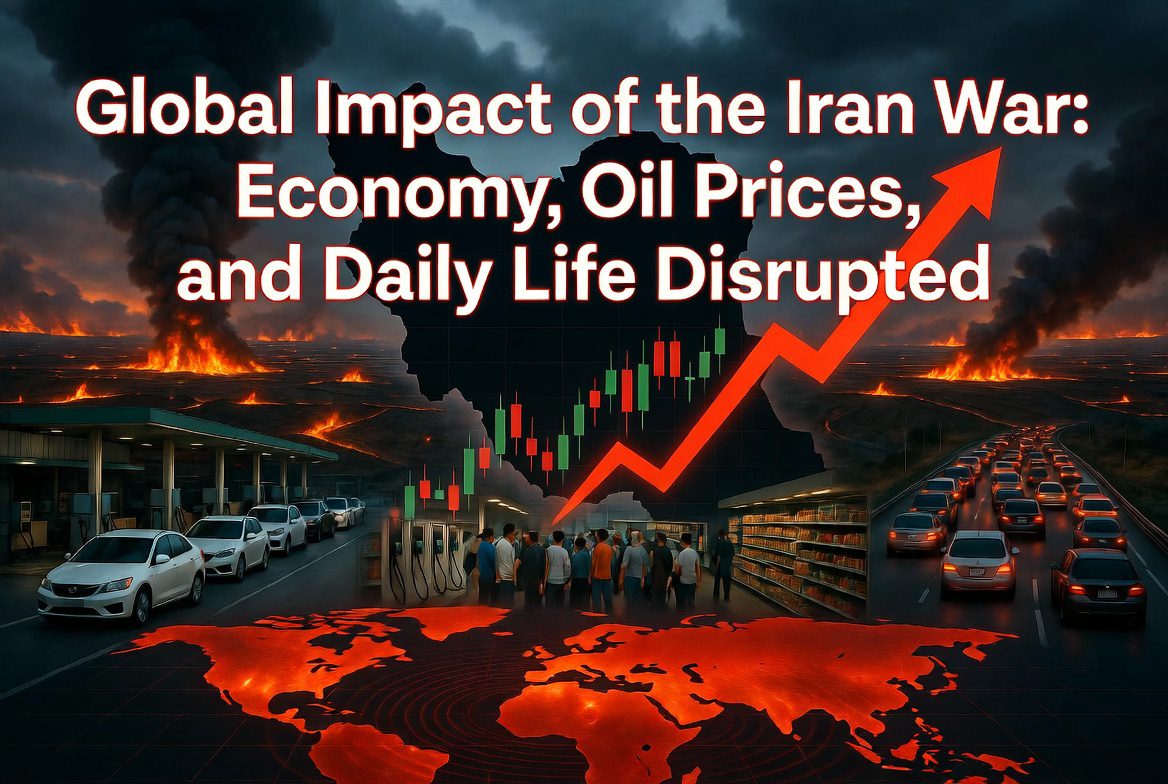
The ongoing war involving Iran, the United States, and Israel is no longer just a regional conflict—it is now creating serious consequences across the global economy, energy markets, and everyday life around the world.
As fighting continues in the Middle East, the ripple effects are being felt from Europe to Asia, raising concerns about inflation, supply shortages, and long-term economic instability.
⛽ Global Energy Crisis Deepens
One of the biggest global impacts of the war is the disruption of oil and gas supplies.
- The Strait of Hormuz, a key route for about 20% of global oil, has been severely affected.
- Oil prices have surged above $100 per barrel, triggering a worldwide energy shock.
- Attacks on oil facilities and shipping routes have reduced supply and created uncertainty in global markets.
“The conflict is causing one of the largest energy supply disruptions in history,” analysts warn.
This situation is pushing fuel prices higher and increasing the cost of transportation, electricity, and manufacturing globally.
📉 Global Economy Slowing Down
The war is already affecting economic growth in major countries:
- Business activity in the U.S., Europe, and Asia has slowed significantly.
- Inflation is rising due to higher energy and logistics costs.
- Experts warn of a possible “stagflation” scenario—slow growth combined with high prices.
Countries that depend heavily on imported energy—especially in Europe and Asia—are being hit the hardest.
🚢 Supply Chain and Supply Disruptions
Global trade networks are also under pressure:
- Shipping routes through the Gulf region are disrupted or delayed.
- Air cargo and logistics costs have increased due to restricted airspace and longer routes.
- Industries like electronics, agriculture, and manufacturing are facing supply shortages.
Oil and gas are also used in fertilizers and production processes, meaning the impact goes beyond fuel.
🍞 Rising Food Prices and Daily Life Impact
The war is affecting ordinary people worldwide:
- Higher fuel costs are increasing food prices and transportation costs.
- Some regions are facing fuel shortages and rationing.
- Businesses are struggling with rising costs, forcing some to reduce operations or increase prices.
Many people globally are “cutting back on driving, heating, and daily expenses” due to rising fuel costs.
📊 Financial Markets and Global Risk
Stock markets and global financial systems are also reacting:
- Markets have become volatile due to uncertainty.
- Central banks are under pressure to balance inflation and economic growth.
- Experts warn that if the war continues, it could trigger a global recession.
🌐 Long-Term Global Consequences
If the conflict continues:
- Energy prices could remain high for months
- Global trade could slow further
- Developing countries may face severe economic stress
Some analysts compare the situation to past oil crises, warning that the long-term effects could reshape the global economy.
📌 Conclusion
The Iran war is no longer just a regional conflict—it has become a global economic crisis in the making. From rising oil prices to supply chain disruptions and inflation, its impact is being felt worldwide.
Without a diplomatic solution, the economic and humanitarian consequences are likely to grow even more severe in the coming months.