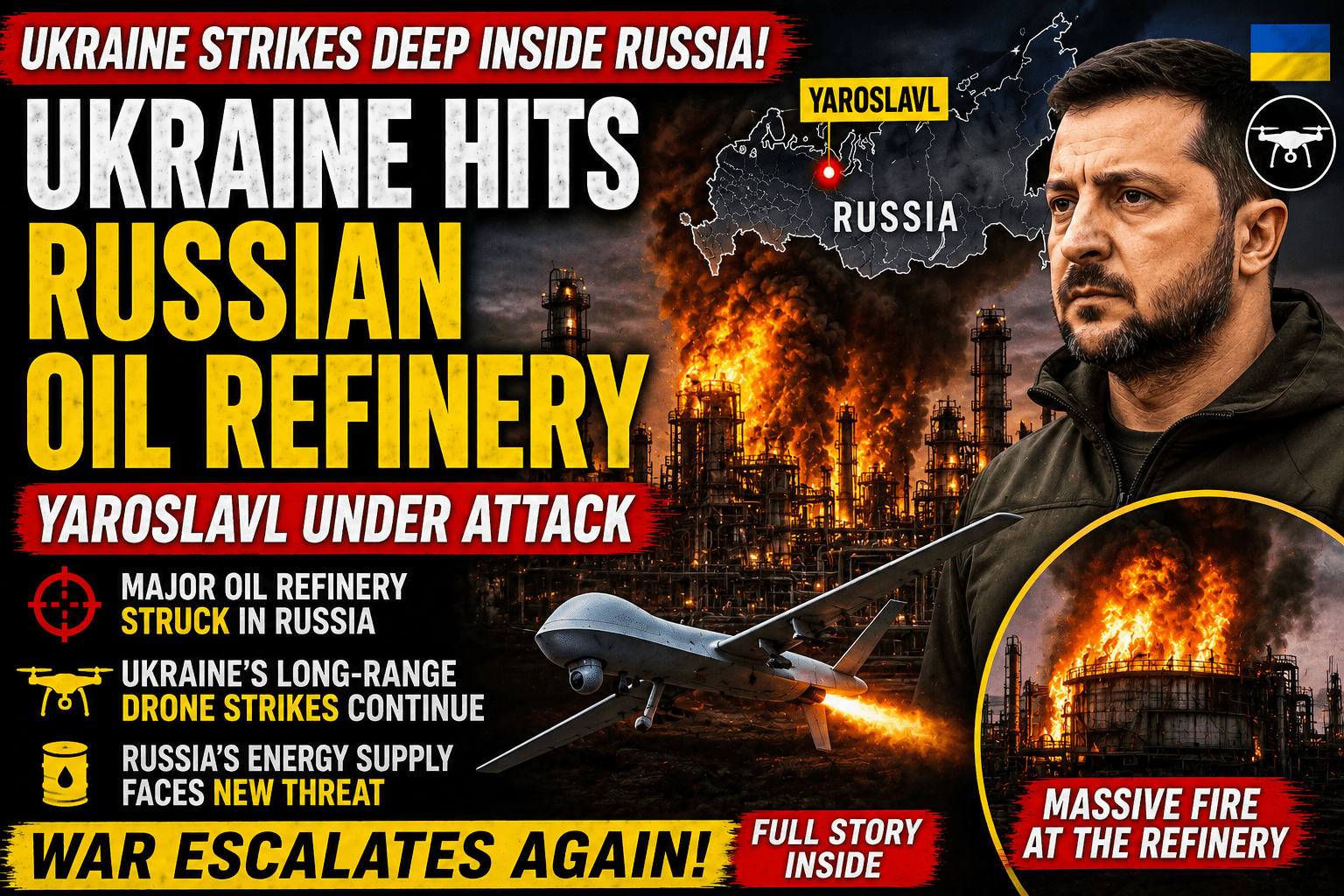
The war between Ukraine and Russia entered another intense phase after Ukrainian forces reportedly launched a drone strike targeting a major Russian oil refinery in the city of Yaroslavl. The attack signals Kyiv’s continued strategy of weakening Russia’s energy infrastructure and disrupting revenue linked to Moscow’s war efforts.
The refinery, located around 700 kilometers from the Ukrainian border, is one of the deepest energy-related targets struck during the conflict. (Reuters)
Ukraine Targets Russian Energy Infrastructure
Ukrainian President Volodymyr Zelenskyy confirmed the operation, stating that Ukraine is increasing attacks on Russian oil and military facilities in response to continued strikes on Ukrainian cities. (Reuters)
According to reports:
- The Yaroslavl refinery was hit during overnight drone operations
- Russian air defenses attempted to intercept incoming drones
- Multiple regions inside Russia reported aerial threats and explosions (Reuters)
Zelenskyy said Ukraine is “bringing the war back home” to Russia. (Reuters)
The strike reflects Ukraine’s growing ability to conduct long-range drone operations deep inside Russian territory.
Russian Oil Sector Under Growing Pressure
Ukraine has intensified attacks on Russia’s oil infrastructure throughout 2026, targeting:
- Refineries
- Storage terminals
- Pipelines
- Export facilities
Several major Russian refineries have already reduced or suspended production following repeated drone attacks. (Reuters)
Facilities affected in recent weeks include:
- Moscow refinery
- Kirishi refinery
- NORSI refinery
- Ryazan refinery
- Tuapse oil terminal (Reuters)
Industry analysts say these attacks are aimed at:
- Reducing Russian fuel exports
- Increasing economic pressure on Moscow
- Disrupting military logistics and financing
Russia Responds With Massive Air Defenses
Russian authorities claimed that hundreds of drones were intercepted overnight across multiple regions.
- Moscow and nearby regions reported drone alerts
- Air defense systems were activated across central Russia
- Officials denied major risks to domestic fuel supplies (Reuters)
Despite official reassurances, repeated attacks are creating operational problems for Russia’s refining industry.
Global Energy Markets Watching Closely
The strikes are also affecting international energy markets:
- Oil prices remain volatile due to fears of supply disruption
- Investors are monitoring damage to Russian refining capacity
- Global fuel markets are reacting to escalating attacks on infrastructure
Russia remains one of the world’s largest energy exporters, making any disruption significant for global trade and inflation.
Environmental Concerns Rising
Some recent attacks on Russian oil facilities have triggered large fires and environmental damage.
Major incidents in regions like Tuapse and Perm reportedly caused:
- Toxic smoke
- Air pollution
- Temporary shutdowns of industrial operations (Wikipedia)
Environmental experts warn that continued strikes on energy infrastructure could create long-term ecological risks.
Peace Talks Still Uncertain
While diplomatic discussions continue internationally, military escalation on both sides is making negotiations increasingly difficult.
- Russia continues missile and drone attacks on Ukraine
- Ukraine is expanding deep-strike capabilities
- Western governments continue military support for Kyiv
Analysts say the war is shifting toward a prolonged conflict focused heavily on infrastructure warfare.
Conclusion
Ukraine’s strike on the Yaroslavl oil refinery highlights the changing nature of the war, where energy infrastructure has become a major battlefield. As both countries intensify attacks far from the front lines, economic and geopolitical risks continue growing.
With no clear peace agreement in sight, the conflict is increasingly affecting global energy markets, security policies, and international stability.