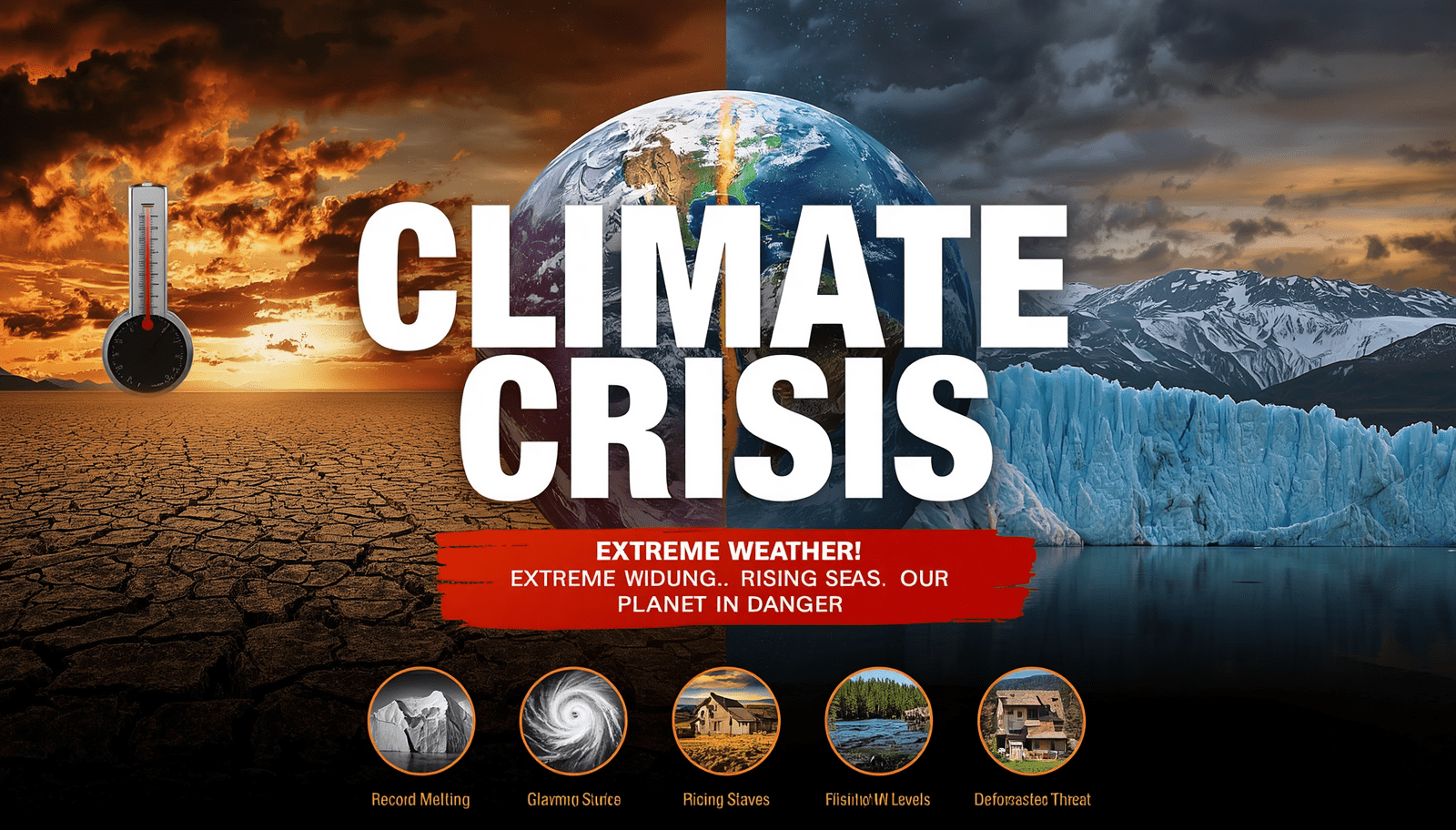
The world is witnessing dramatic geographic and environmental changes in 2026, as extreme weather, melting glaciers, and rising sea levels reshape the planet. Scientists warn that these shifts are accelerating faster than expected, raising serious concerns for ecosystems, economies, and human life.
Record Heatwaves Signal Rising Global Temperatures
Across Asia, the Middle East, and Europe, extreme heatwaves are breaking historical records. Temperatures in some regions have exceeded 50°C, putting millions at risk.
Experts link these conditions to Climate Change, driven by increasing greenhouse gas emissions.
- Heat-related illnesses are rising
- Water shortages are becoming more common
- Agriculture is being severely affected
“Extreme heat is no longer rare—it’s becoming the new normal,” climate researchers warn.
Glacier Melting Accelerates in Key Regions
Glaciers in major regions like the Himalayas and Antarctica are melting at an alarming rate.
This has serious consequences:
- Rising sea levels
- Increased risk of flooding
- Loss of freshwater resources
Millions of people depend on glacier-fed rivers, especially in Asia, making this a critical issue for long-term water security.
Coastal Areas Under Threat from Rising Seas
Sea levels continue to rise, putting low-lying regions at risk. Countries like Bangladesh are already facing severe flooding and coastal erosion.
- Entire communities are being displaced
- Saltwater is contaminating freshwater supplies
- Infrastructure damage is increasing
Small island nations are among the most vulnerable, with some at risk of becoming uninhabitable in the future.
Extreme Weather Events Becoming More Frequent
The intensity and frequency of natural disasters are increasing worldwide:
- Stronger cyclones and hurricanes
- Heavy rainfall and flooding
- Unpredictable monsoon patterns in India and nearby regions
These events are linked to shifts in atmospheric systems caused by global warming.
Deforestation Continues to Harm the Planet
Forests are disappearing at an alarming rate, especially in regions like the Amazon Rainforest.
- Biodiversity loss is accelerating
- Carbon emissions are increasing
- Natural climate regulation systems are weakening
Forests play a crucial role in absorbing carbon dioxide, and their destruction is worsening climate change.
Global Impact and Future Risks
The combined impact of these changes is creating serious global challenges:
- Food and water insecurity
- Economic losses due to disasters
- Increased migration from affected regions
Scientists warn that without immediate action, these problems could intensify in the coming decades.
Conclusion
The rapid changes in Earth’s geography highlight the urgent need for global action. From extreme heatwaves to rising sea levels, the effects of Climate Change are becoming more visible and more dangerous.
Unless governments and societies take strong steps to reduce emissions and protect natural resources, the planet will continue to face growing environmental and humanitarian challenges.