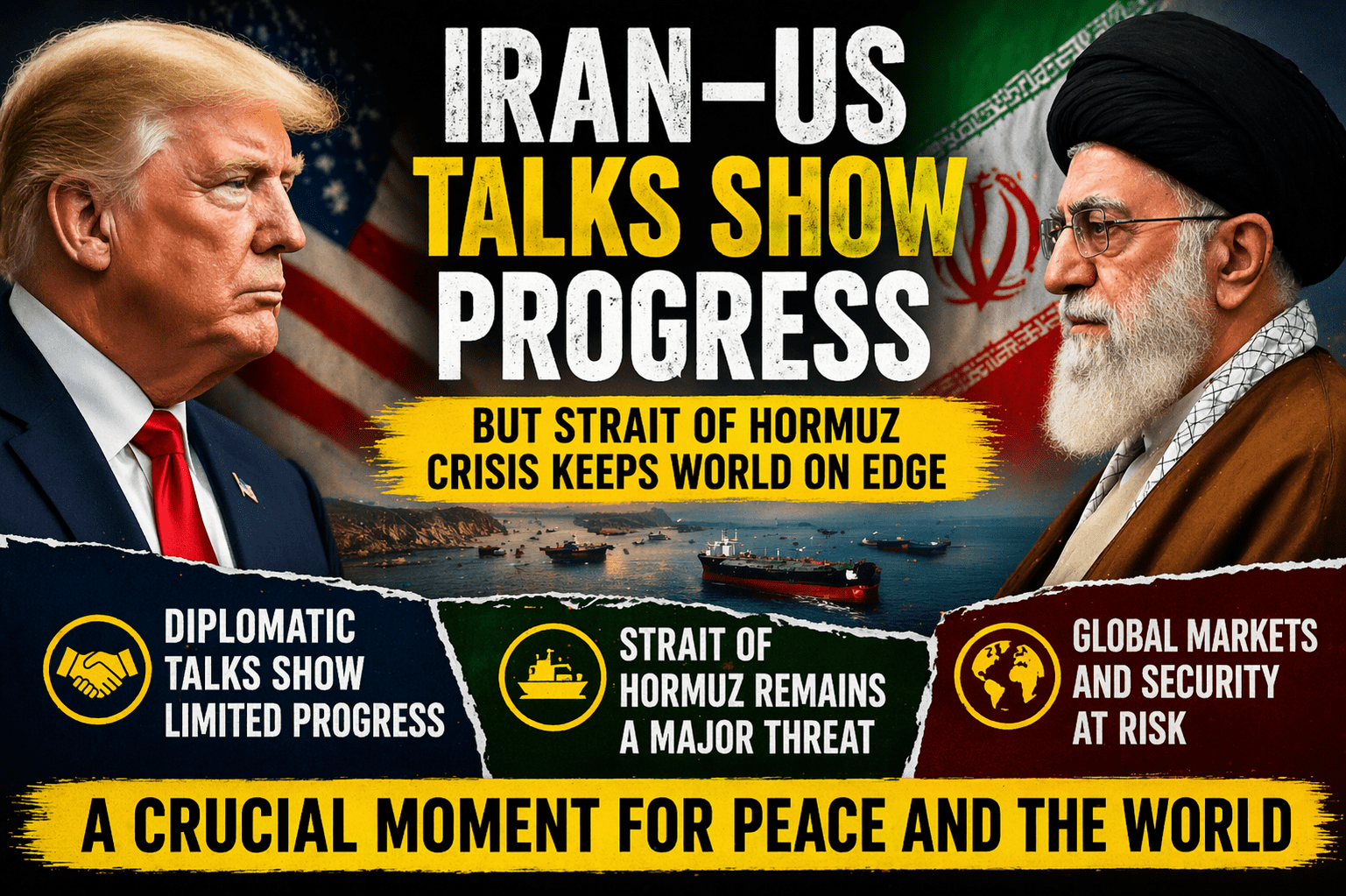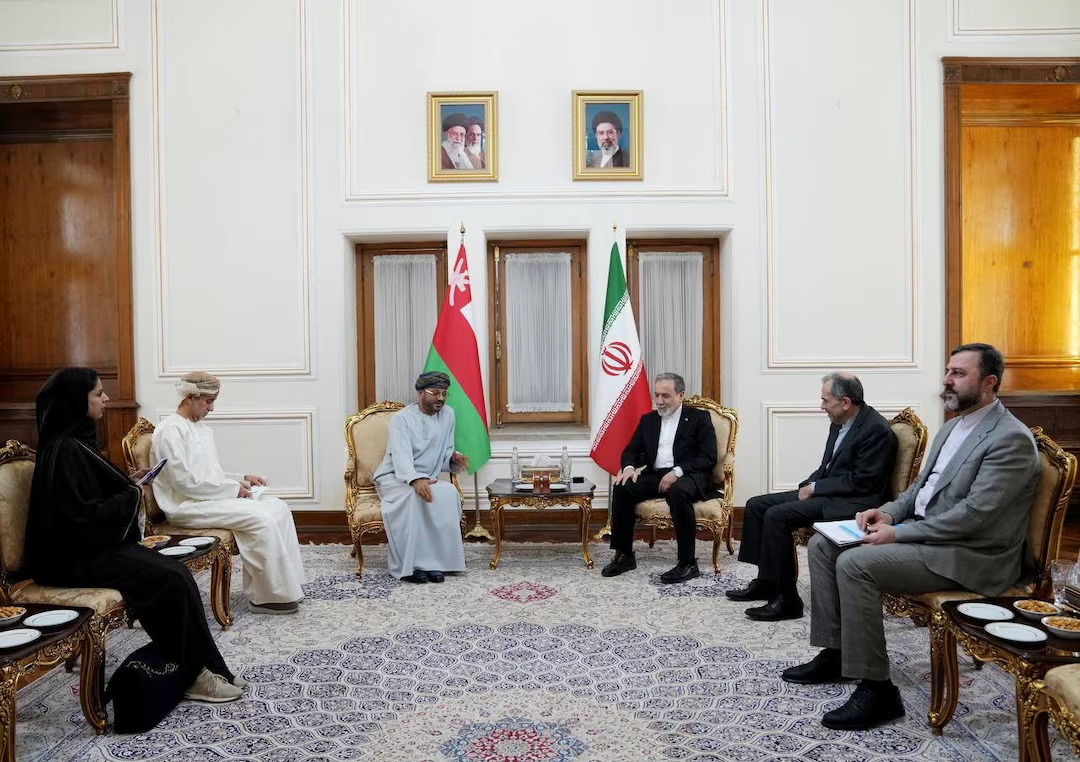
Iran and Oman have resumed discussions on establishing a temporary navigational corridor to facilitate commercial shipping through the Strait of Hormuz. The development comes as the diplomatic deadlock between Iran and the United States remains unresolved.
The Strait of Hormuz is a critical maritime route for global energy trade. According to Reuters, before the conflict began, roughly one-fifth of the world’s oil and liquefied natural gas shipments passed through the waterway. Shipping activity has faced significant disruption since the conflict began in February.
Key Point: Iran and Oman are working on a temporary navigational corridor, while mine clearance in the Strait of Hormuz is also part of the discussions.
Why Are Iran and Oman Working on a Hormuz Corridor?
Iran and Oman have been holding intermittent discussions for several weeks over how to manage maritime traffic through the Strait of Hormuz. Their latest efforts are focused on the possibility of creating a temporary shipping corridor.
The main objective of the proposal is to allow vessels to resume movement through the strategic waterway under a more controlled and relatively safer arrangement.
Iran and Oman discussed a joint temporary navigational corridor on Tuesday and also addressed the issue of clearing mines from the strait.
Shipping Remains Risky in the Strait of Hormuz
Despite discussions over a temporary corridor, maritime security concerns in the Strait of Hormuz have not completely disappeared.
According to Reuters, an oil tanker was disabled after being hit by an unidentified projectile near the entrance to Ash Shishah in Oman on Tuesday. The incident highlights the continuing security risks facing commercial vessels operating in the region.
For shipping companies, the biggest challenge is not simply reopening the route, but ensuring safe, predictable and sustainable navigation.
US-Iran Tensions Remain Unresolved
Despite progress in Iran-Oman discussions, the broader diplomatic dispute between Washington and Tehran remains unresolved.
Although active hostilities have eased, diplomatic efforts aimed at reaching a broader peace agreement have yet to produce a breakthrough. This continues to create uncertainty over the full normalization of commercial shipping through the Strait of Hormuz.
Meanwhile, the United States has maintained economic pressure on Iran. Washington has also warned countries that continue doing business with Iran that they could face penalties, although Reuters reported that the penalties had not been immediately imposed.
What Could Happen to Oil Prices?
The Strait of Hormuz is extremely important to global oil markets. A prolonged disruption in the waterway could put additional pressure on crude oil supplies, shipping costs and international energy markets.
However, despite the latest developments, oil prices did not immediately surge. According to Reuters, traders had largely priced in the impact of US sanctions, while oil prices continued to decline for a second day.
A successful implementation of the Hormuz corridor could provide an important relief signal to global energy markets, but lasting stability would require a broader geopolitical settlement.
Will the Strait of Hormuz Fully Reopen?
For now, there is no guarantee that commercial shipping through the Strait of Hormuz will return to normal levels.
A temporary corridor could provide a short-term solution, but a long-term reopening would require several issues to be addressed, including maritime security, mine clearance, Iran-US tensions and broader regional stability.
US President Donald Trump has said that mines have been cleared from the strait, while the issue of mine clearance has also featured in discussions between Iran and Oman.
Oman’s Diplomatic Role
Oman’s geographic proximity to Iran and its diplomatic relationship with Tehran have made Muscat an important intermediary in the situation.
Coordination between Iran and Oman over a temporary Hormuz corridor could potentially create additional space for broader diplomatic efforts. If maritime traffic can be restored under relatively safe conditions, it could also help reduce regional tensions.
Bottom Line
The Iran-Oman discussions over a temporary Hormuz corridor represent an important development for global shipping and energy markets. However, the announcement of a corridor does not necessarily mean that the Strait of Hormuz has been fully reopened.
The next stage will depend on how effectively the parties address mine clearance, maritime security and the broader diplomatic deadlock between Iran and the United States.
For now, international attention remains focused on the Strait of Hormuz, Iran-Oman talks and US-Iran negotiations, as developments on these fronts could have a direct impact on global energy supplies and regional stability.