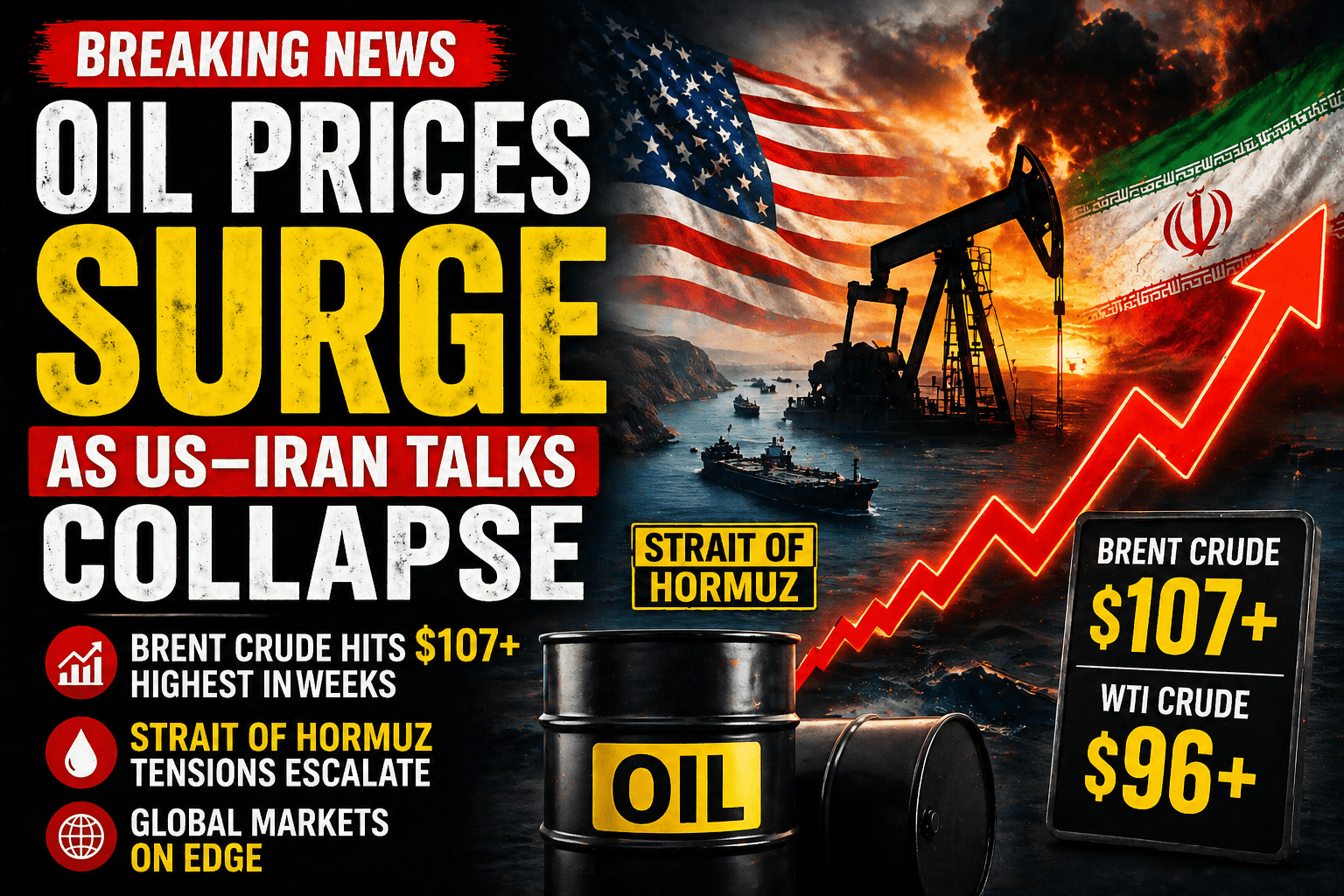
Global oil prices have surged sharply after peace talks between the United States and Iran stalled, raising fresh concerns about energy supply disruptions and economic instability worldwide.
The ongoing conflict in the Middle East continues to shake global markets, with the Strait of Hormuz remaining at the center of the crisis.
Oil Prices Jump to Multi-Week Highs
Oil markets reacted immediately to the breakdown in diplomacy:
- Brent crude rose above $107 per barrel, reaching its highest level in weeks
- U.S. West Texas Intermediate (WTI) climbed close to $96 per barrel
- Both benchmarks have recorded strong weekly gains since the conflict intensified
Analysts say the price surge reflects growing fears that supply disruptions could worsen if tensions continue.
Peace Talks Collapse, Tensions Rise
Diplomatic efforts between Washington and Tehran have hit another roadblock:
- Planned talks failed to move forward after key meetings were canceled
- Disagreements remain over sanctions, nuclear policy, and regional control
- Both sides continue to take hard positions, reducing chances of a quick resolution
The lack of progress has increased uncertainty across global markets.
Strait of Hormuz Remains a Major Risk
The Strait of Hormuz, one of the world’s most important oil routes, remains unstable:
- Shipping activity is still severely limited due to military tensions
- A large portion of global oil supply passes through this narrow waterway
- Ongoing naval blockades and security risks are disrupting normal trade
Experts warn that any further escalation could lead to even tighter supply and higher prices.
Global Economic Impact Growing
The rise in oil prices is already affecting the global economy:
- Inflation pressures are increasing due to higher fuel costs
- Transport and manufacturing expenses are rising
- Financial markets are becoming more volatile
Some analysts warn that prolonged disruption could slow global economic growth and impact developing countries the most.
Market Outlook and Forecast
Major financial institutions are adjusting their forecasts:
- Some expect oil prices to remain elevated in the coming months
- Supply shortages could worsen if the conflict continues
- Investors are closely watching diplomatic developments for any sign of progress
Despite occasional optimism, markets remain highly sensitive to every update from the region.
Conclusion
The sharp rise in oil prices highlights how closely global markets are tied to geopolitical tensions. With US–Iran talks stalled and the Strait of Hormuz still under threat, uncertainty is likely to continue.
Unless meaningful diplomatic progress is achieved, the world could face prolonged energy instability and rising economic pressure.