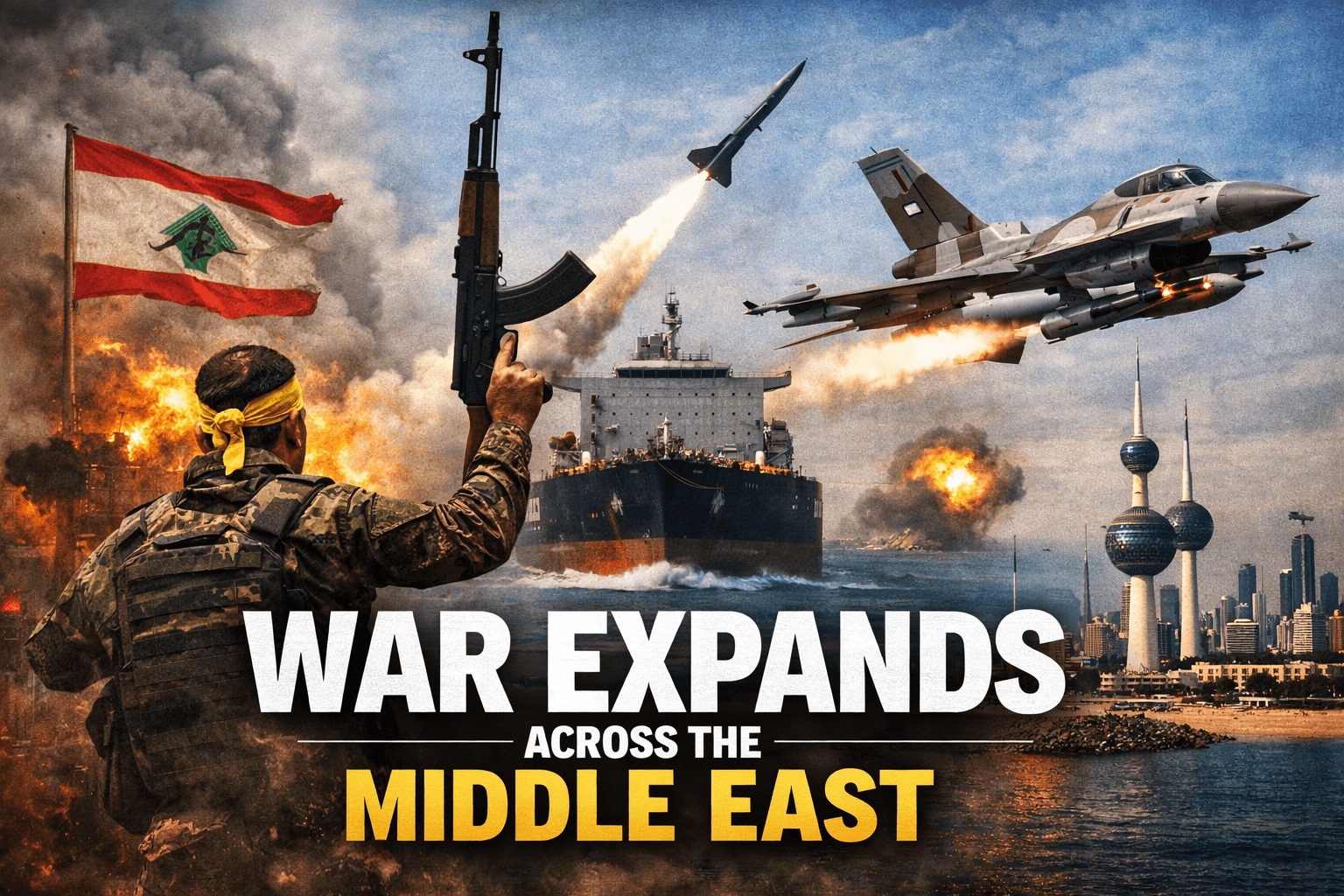
The ongoing conflict between Iran, the United States, and Israel is rapidly expanding beyond its original battleground, drawing several Middle Eastern countries into the crisis and raising fears of a wider regional war.
Military exchanges that began with large-scale U.S. and Israeli strikes on Iranian targets in late February have now triggered retaliatory attacks and proxy clashes across multiple countries in the region. The growing scope of the conflict is affecting civilian populations, military installations, and global energy routes.
Missile Strikes Reach Multiple Countries
Iran has launched missile and drone attacks targeting U.S. and allied military facilities throughout the Middle East. Several Gulf nations hosting American bases have been caught in the crossfire as the conflict intensifies.
Countries including Bahrain, Qatar, and Jordan have reported missile interceptions and damage from falling debris during the attacks.
- In Jordan, dozens of Iranian drones and missiles were intercepted by joint U.S. and Jordanian air defense systems. Some debris caused injuries and minor damage to residential areas.
- Bahrain, home to the U.S. Navy’s Fifth Fleet, was struck by Iranian missiles targeting military infrastructure.
- Qatar also reported missile attacks and temporary closure of airspace during the escalation.
These incidents highlight how the conflict is spreading across the broader Gulf region.
“A mounting multi-front war has erupted across the Middle East,” analysts warn, noting that more than a dozen countries are now affected directly or indirectly by the conflict.
Fighting Intensifies in Lebanon
Another major flashpoint has emerged in Lebanon, where Iran-aligned group Hezbollah has launched rockets toward Israeli territory. Israel has responded with airstrikes targeting Hezbollah positions and infrastructure inside Lebanon.
The clashes have triggered a humanitarian crisis as civilians flee heavily bombed areas. Reports indicate hundreds of casualties and hundreds of thousands of displaced people as fighting intensifies.
Strategic Shipping Routes Under Threat
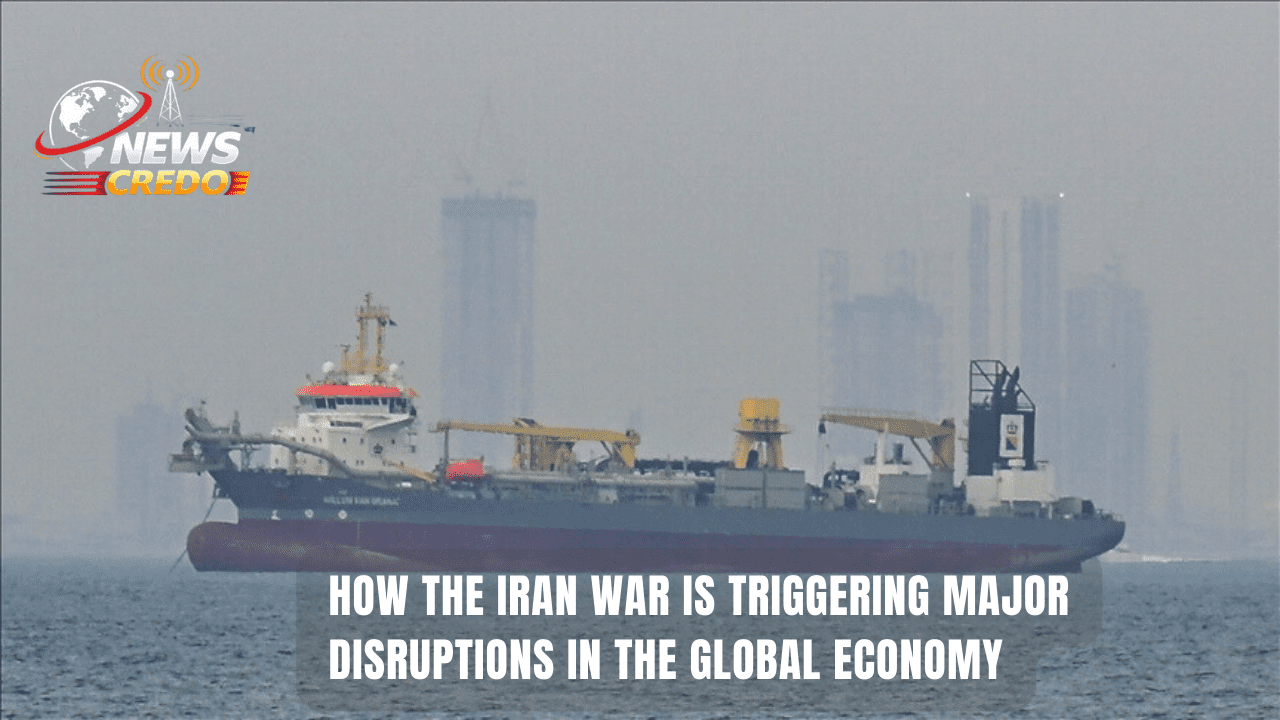
The conflict is also threatening one of the world’s most important energy corridors — the Strait of Hormuz.
Following the escalation, shipping traffic through the strait dropped sharply after Iran warned vessels linked to the United States and its allies to avoid the area. The strait normally carries roughly 20% of the world’s seaborne oil supply, making it a critical global energy chokepoint.
Energy analysts warn that disruptions to the strait could push global oil prices higher and further destabilize international markets.
Risk of a Larger Regional War
Security experts say the growing number of countries involved could turn the conflict into one of the most significant regional wars in decades.
Military alliances, proxy militias, and strategic locations across the Middle East are now directly connected to the fighting. Continued retaliation between the opposing sides may pull additional states into the confrontation.
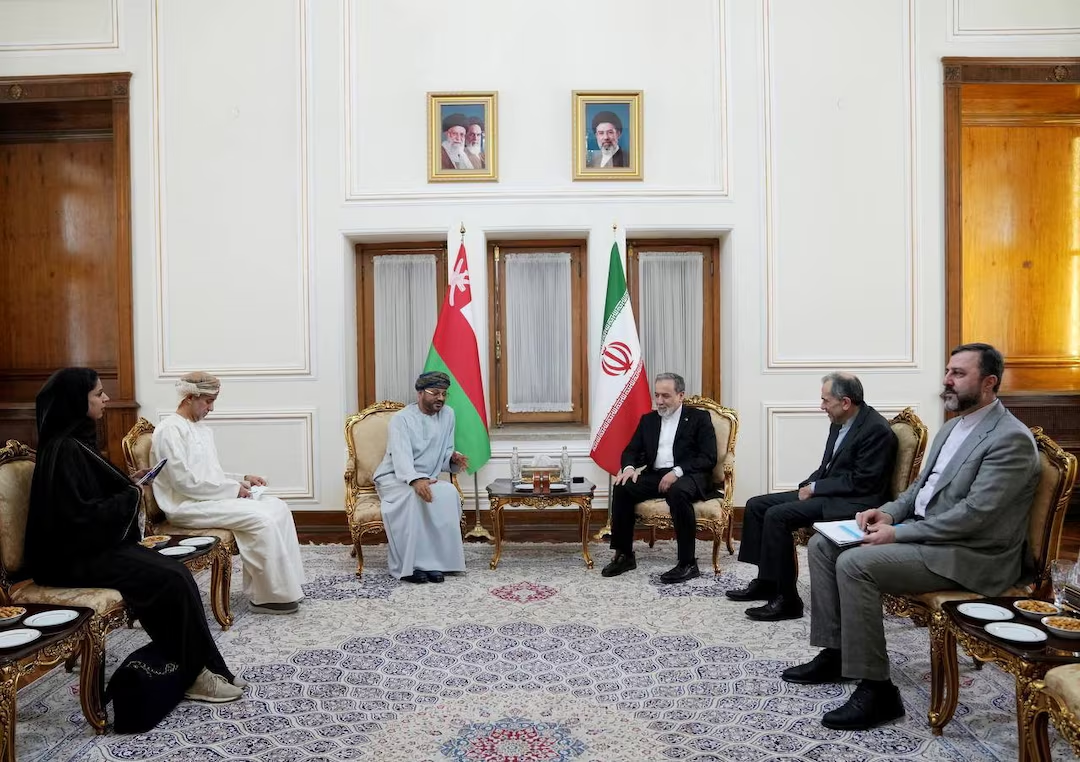
For now, diplomatic efforts to de-escalate the conflict remain limited, and the region continues to brace for further military operations.